7 Powerful Insights on Treatment for Voice Loss Explained Pr
Voice loss can affect communication, work, and daily activities. Many people experience temporary voice problems due to infections, overuse of the voice, allergies, or irritation. Understanding the right treatment for voice loss is important for restoring normal speech and preventing recurring issues. Individuals in Thrissur and other regions often seek information about effective ways to manage voice problems, especially when symptoms interfere with everyday life.
Voice loss may range from mild hoarseness to a complete inability to speak. The condition can occur suddenly or develop gradually over time. Early attention and proper care often help improve recovery and reduce complications.
1. What Is Voice Loss
Voice loss, also known as aphonia when complete, occurs when the vocal cords cannot produce sound normally. The vocal cords are located within the voice box (larynx) and vibrate when air passes through them. Any condition affecting these structures can lead to voice changes.
Common voice changes include:
- Hoarseness
- Weak voice
- Breathy voice
- Strained voice
- Complete voice loss
Understanding the cause is the first step in determining the most suitable treatment for voice loss.
2. Common Causes of Voice Loss
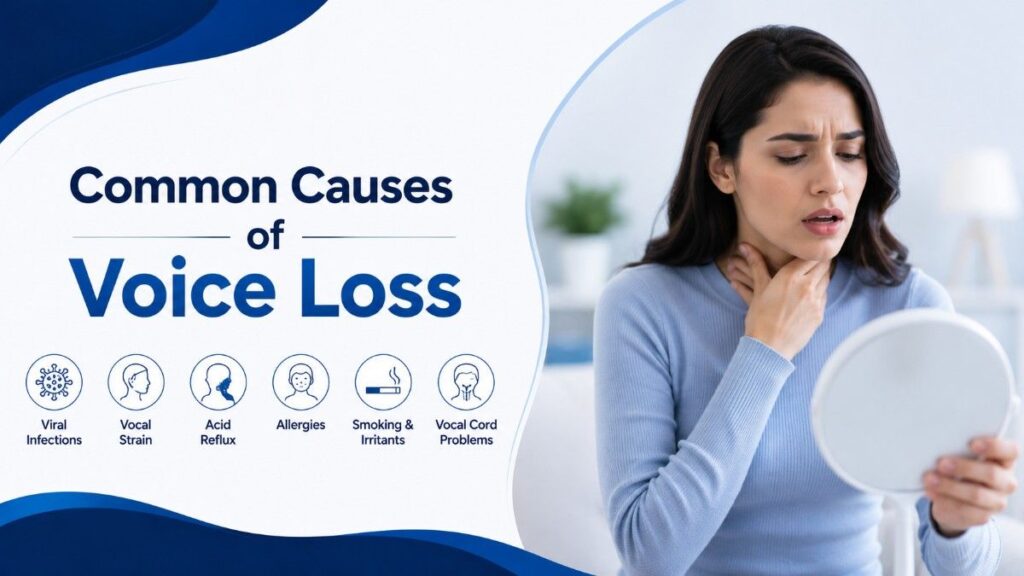
Several factors can contribute to voice loss. Some are temporary, while others may require medical attention.
Viral Infections
Colds, flu, and other respiratory infections can inflame the vocal cords and cause temporary voice loss.
Excessive Voice Use
Speaking loudly, shouting, singing for long periods, or frequent public speaking may strain the vocal cords.
Laryngitis
Inflammation of the larynx is one of the most common causes of voice loss.
Acid Reflux
Stomach acid reaching the throat can irritate the vocal cords and affect voice quality.
Allergies
Allergic reactions may lead to throat irritation and swelling.
Smoking and Irritants
Tobacco smoke and environmental pollutants can damage vocal cord tissues.
Vocal Cord Nodules or Polyps
Repeated vocal strain may lead to benign growths that interfere with normal voice production.
Neurological Conditions
Certain nerve-related disorders may affect vocal cord movement.
Identifying the underlying cause helps determine the most appropriate treatment for voice loss.
3. Types of Voice Loss
Voice loss can be classified into different categories based on its cause and duration.
Acute Voice Loss
This develops suddenly and often results from infections, vocal strain, or irritation.
Chronic Voice Loss
Symptoms lasting more than a few weeks may indicate an underlying condition requiring further evaluation.
Functional Voice Loss
The vocal cords may appear normal, but voice production is affected by how the voice is used.
Organic Voice Loss
Structural changes in the vocal cords or larynx lead to voice difficulties.
Each type may require a different approach to treatment for voice loss.
4. Symptoms Associated With Voice Loss
Voice loss may be accompanied by several additional symptoms.
Common symptoms include:
- Hoarseness
- Sore throat
- Dry throat
- Frequent throat clearing
- Voice fatigue
- Difficulty speaking loudly
- Breathing discomfort
- Cough
Persistent symptoms should not be ignored, especially if they continue for several weeks.
5. When to Seek Medical Attention
While many cases improve with rest, certain situations require professional evaluation.
Consult a healthcare professional if:
- Voice loss lasts longer than two weeks
- Symptoms worsen over time
- There is difficulty breathing
- Swallowing becomes painful
- Blood appears when coughing
- There is unexplained weight loss
- Voice changes occur without an obvious cause
Early diagnosis can help guide effective treatment for voice loss.
6. Diagnosis of Voice Loss
Proper diagnosis helps identify the underlying cause and determine the best management plan.
Medical History
A healthcare provider may ask about:
- Duration of symptoms
- Recent illnesses
- Voice usage habits
- Smoking history
- Allergies
- Acid reflux symptoms
Physical Examination
The throat, mouth, and neck may be examined for signs of inflammation or abnormalities.
Laryngoscopy
A specialized instrument allows visualization of the vocal cords.
Voice Assessment
Voice quality, pitch, and vocal function may be evaluated.
Additional Tests
Depending on symptoms, imaging or laboratory investigations may be recommended.
Accurate diagnosis is an important step before starting treatment for voice loss.
7. Treatment for Voice Loss
The most suitable treatment for voice loss depends on the underlying cause.
Voice Rest
Resting the voice is often one of the simplest and most effective measures.
Helpful practices include:
- Avoid shouting
- Limit prolonged conversations
- Reduce whispering
- Give the vocal cords time to heal
Hydration
Drinking adequate fluids helps maintain vocal cord moisture.
Good hydration can:
- Reduce throat dryness
- Improve vocal cord function
- Support healing
Steam Inhalation
Warm steam may help soothe irritated throat tissues.
Managing Infections
When infections contribute to symptoms, supportive care may be recommended based on the underlying cause.
Reflux Management
Reducing acid reflux can significantly improve voice quality.
Lifestyle measures may include:
- Avoiding late-night meals
- Limiting spicy foods
- Maintaining a healthy weight
Allergy Control
Managing allergies may reduce throat irritation and improve vocal comfort.
Voice Therapy
Speech and voice therapy may be recommended for individuals with persistent voice problems.
Voice therapy focuses on:
- Proper breathing techniques
- Efficient voice use
- Reducing vocal strain
- Improving vocal endurance
Treatment of Vocal Cord Lesions
Certain growths such as nodules or polyps may require specialized treatment based on severity.
Managing Underlying Medical Conditions
Neurological, hormonal, or structural causes may require targeted treatment approaches.
8. Benefits of Early Treatment for Voice Loss
Seeking timely care offers several advantages.
Benefits include:
- Faster recovery
- Reduced vocal strain
- Prevention of complications
- Improved communication
- Better quality of life
- Lower risk of chronic voice problems
Early treatment for voice loss may also help preserve long-term vocal health.
9. Home Care Tips for Voice Recovery
Simple self-care measures can support healing.
Stay Hydrated
Drink water regularly throughout the day.
Avoid Smoking
Smoking can worsen irritation and delay recovery.
Limit Caffeine
Excessive caffeine may contribute to dehydration.
Use a Humidifier
Moist air can help soothe irritated airways.
Avoid Whispering
Whispering may place additional strain on the vocal cords.
Take Vocal Breaks
Allow periods of silence during the day if the voice feels tired.
These habits can complement professional treatment for voice loss.
10. Preventing Future Voice Problems
Preventive measures help reduce the risk of recurring symptoms.
Practice Healthy Voice Use
Avoid excessive shouting or speaking over loud noise.
Warm Up the Voice
Individuals who sing or speak professionally may benefit from vocal warm-up exercises.
Maintain Good Hydration
Proper hydration supports vocal cord flexibility.
Manage Allergies and Reflux
Controlling these conditions can reduce irritation.
Avoid Environmental Irritants
Minimize exposure to smoke and pollutants whenever possible.
Get Adequate Rest
General health and recovery influence vocal performance
11. Recovery Timeline
Recovery varies depending on the cause.
- Mild viral laryngitis may improve within a few days.
- Vocal strain often improves with adequate rest.
- Chronic conditions may require longer treatment periods.
- Structural abnormalities may need specialized care.
Following recommendations consistently can improve outcomes from treatment for voice loss.
Final Thoughts on Treatment for Voice Loss
Voice loss can affect daily communication, professional responsibilities, and overall comfort. Understanding the causes, recognizing symptoms, and seeking appropriate care are important steps toward recovery. Simple measures such as hydration, voice rest, and avoiding irritants may help many individuals regain normal voice function. When symptoms persist, professional evaluation can identify the underlying issue and guide the most suitable treatment for voice loss. Individuals seeking information about voice health in Thrissur should remember that early attention often contributes to better recovery and long-term vocal well-being. For additional information about voice disorders and vocal health, you can refer to the resources provided by American Speech- Language -Hearing Association (ASHA) , which offers educational information on voice problems, evaluation, and treatment approaches.
Table of Contents
Learn More
Learn More
Learn More
Learn More
Learn More
Frequently Asked Questions
What is the most common cause of voice loss
Viral infections and vocal strain are among the most common causes.
How long does voice loss usually last
Many cases improve within a few days to two weeks, depending on the caus
Can dehydration cause voice loss
Yes. Inadequate hydration can affect vocal cord function and contribute to voice problems.
Is voice rest helpful
Yes. Voice rest is often a key part of treatment for voice loss.
Can acid reflux affect the voice
Yes. Acid reflux can irritate the vocal cords and lead to hoarseness or voice loss.
Should I whisper when I lose my voice
No. Whispering may place additional strain on the vocal cords.
When should I seek medical help for voice loss
If symptoms last longer than two weeks or worsen over time.
Can allergies cause voice changes
Yes. Allergies can irritate the throat and affect vocal quality.
What is voice therapy
Voice therapy involves exercises and techniques that improve vocal function and reduce strain.
Can voice loss be prevented
Many cases can be prevented through healthy voice habits, hydration, and avoiding irritants.
Dr Salison Salim Panicker
MBBS, DLO, DNB, PGDCC
ENT Surgeon and