Causes of Voice Disorders and How They Affect Vocal Health
Voice disorders can affect anyone, from children and adults to teachers, singers, public speakers, and professionals who rely heavily on their voices. When the voice becomes hoarse, weak, strained, breathy, or difficult to use, it may indicate an underlying condition affecting the vocal cords or surrounding structures. Understanding the causes of voice disorders is important because early recognition can help prevent long-term complications and support effective treatment.
The human voice is produced when air passes through the vocal cords inside the larynx, also known as the voice box. Healthy vocal cords vibrate smoothly to create clear sound. Any condition that interferes with this process can lead to voice changes. The causes of voice disorders range from temporary issues such as infections to chronic conditions requiring specialized ENT care.

What Are Voice Disorders?
Voice disorders occur when the quality, pitch, volume, or clarity of the voice becomes abnormal. Individuals may notice:
- Hoarseness
- Weak voice
- Breathy voice
- Vocal fatigue
- Voice breaks
- Difficulty speaking
Understanding the causes of voice disorders helps identify the underlying issue and guide appropriate treatment.
Why Understanding the Causes Matters
Many people ignore voice changes, assuming they will resolve naturally. However, persistent symptoms may indicate more serious conditions affecting the vocal cords or throat.
Knowing the causes of voice disorders allows for:
- Early diagnosis
- Better treatment outcomes
- Prevention of complications
- Improved vocal health
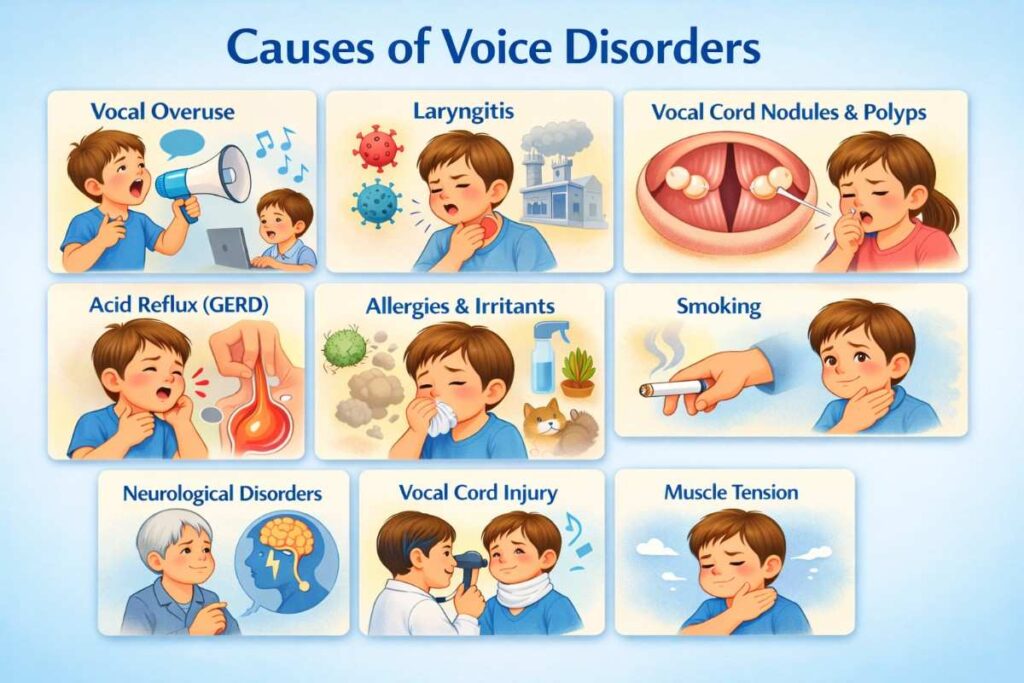
Vocal Overuse and Vocal Strain
One of the most common causes of voice disorders is excessive voice use.
Activities that may strain the vocal cords include:
- Shouting
- Speaking loudly for long periods
- Singing without proper technique
- Frequent public speaking
Repeated strain can cause inflammation and injury to the vocal cords.
Acute Laryngitis
Acute laryngitis is a short-term inflammation of the voice box.
Common triggers include:
- Viral infections
- Excessive voice use
- Irritation from pollutants
Symptoms may include:
- Sudden hoarseness
- Voice loss
- Throat discomfort
This is among the most frequent temporary causes of voice disorders.
Chronic Laryngitis
Chronic laryngitis occurs when inflammation persists for several weeks or months.
Possible causes include:
- Smoking
- Acid reflux
- Allergies
- Long-term exposure to irritants
Persistent inflammation can significantly affect vocal quality.
Acid Reflux Disease
Acid reflux can irritate the throat and vocal cords when stomach acid travels upward.
Common symptoms include:
- Hoarseness
- Chronic throat clearing
- Persistent cough
- Throat irritation
Acid reflux is one of the leading causes of voice disorders in adults.
Vocal Cord Nodules
Vocal cord nodules are small growths that develop due to repeated vocal strain.
People at higher risk include:
- Teachers
- Singers
- Coaches
- Public speakers
Symptoms include:
- Hoarseness
- Vocal fatigue
- Reduced voice strength
Vocal Cord Polyps
Polyps are soft growths that form on the vocal cords.
They may result from:
- Sudden vocal trauma
- Chronic voice misuse
- Smoking
Voice changes caused by polyps often require specialized evaluation.
Vocal Cord Cysts
Vocal cord cysts are fluid-filled lesions that interfere with normal vocal cord vibration.
Symptoms may include:
- Persistent hoarseness
- Reduced vocal range
- Voice fatigue
Among structural causes of voice disorders, cysts are relatively common.
Vocal Cord Paralysis
Vocal cord paralysis occurs when one or both vocal cords cannot move properly.
Possible causes include:
- Nerve injury
- Surgery
- Neurological disease
- Viral infections
Symptoms may include:
- Weak voice
- Difficulty swallowing
- Breathing issues
Allergies and Throat Irritation
Allergic reactions can cause inflammation affecting the throat and voice.
Common triggers include:
- Dust
- Pollen
- Pet dander
- Mold
Allergies are among the overlooked causes of voice disorders.
Respiratory Infections
Upper respiratory infections can temporarily affect vocal function.
Examples include:
- Common cold
- Influenza
- Sinus infections
Inflammation associated with infection often results in hoarseness and discomfort.
Smoking and Tobacco Use
Smoking damages the vocal cords and surrounding tissues.
Long-term smoking can lead to:
- Chronic hoarseness
- Vocal cord inflammation
- Increased risk of throat disease
Tobacco remains one of the most preventable causes of voice disorders.
Environmental Irritants
Exposure to harmful substances may affect vocal health.
Examples include:
- Industrial chemicals
- Air pollution
- Dust
- Strong fumes
Continuous exposure can contribute to chronic voice problems.
Neurological Disorders
Certain neurological conditions can affect voice production.
Examples include:
- Parkinson’s disease
- Stroke
- Multiple sclerosis
These conditions interfere with muscle control necessary for speech.
Hormonal Changes
Hormonal fluctuations may influence voice quality.
Factors include:
- Puberty
- Menopause
- Thyroid disorders
Hormonal changes can alter vocal cord structure and function.
Muscle Tension Dysphonia
Muscle tension dysphonia occurs when excessive muscle tension affects voice production.
Symptoms include:
- Vocal fatigue
- Tight throat sensation
- Hoarseness
This functional disorder is increasingly recognized among the modern causes of voice disorders.
Psychological Stress
Emotional stress can impact vocal performance.
Stress may contribute to:
- Muscle tension
- Vocal fatigue
- Changes in speaking patterns
Managing stress often improves voice quality.
Professional Voice Use
Individuals who depend heavily on their voice are more likely to develop voice problems.
Examples include:
- Teachers
- Singers
- Lawyers
- Call center professionals
- Religious leaders
Preventive vocal care is important for long-term vocal health.
Age-Related Voice Changes
As people age, the vocal cords naturally undergo structural changes.
Common effects include:
- Reduced vocal strength
- Breathiness
- Vocal fatigue
Age-related changes can contribute to voice difficulties in older adults.
Preventing Voice Disorders
Many causes of voice disorders can be minimized through healthy vocal habits.
Helpful tips include:
- Stay hydrated
- Avoid smoking
- Limit excessive shouting
- Rest the voice when needed
- Manage acid reflux
- Seek treatment for allergies
- Use proper vocal techniques
Preventive care helps maintain long-term voice quality.
When to Seek Medical Evaluation
Consult an ENT specialist if you experience:
- Hoarseness lasting more than two weeks
- Voice loss
- Persistent throat discomfort
- Difficulty swallowing
- Vocal fatigue
- Frequent voice changes
Early assessment helps identify the underlying causes and improve treatment outcomes.
Summary
The causes of voice disorders are diverse and may include vocal strain, infections, acid reflux, smoking, allergies, vocal cord lesions, neurological conditions, and age-related changes. Understanding these factors is essential for protecting vocal health and recognizing when professional evaluation is needed.
Many voice disorders can be prevented or effectively managed through early diagnosis, lifestyle modifications, voice therapy, and appropriate medical care. Individuals experiencing persistent hoarseness or voice changes should seek evaluation to identify the cause and begin treatment as early as possible.For additional information about the causes of voice disorders, symptoms, diagnosis, and treatment options, visit the Voice Disorders Information resource. Understanding the causes of voice disorders and seeking timely evaluation can help protect vocal health and improve long-term voice quality.
Table of Contents
Learn More
Learn More
Learn More
Learn More
Learn More
Frequently Asked Questions
Dr Salison Salim Panicker
MBBS, DLO, DNB, PGDCC
ENT Surgeon and