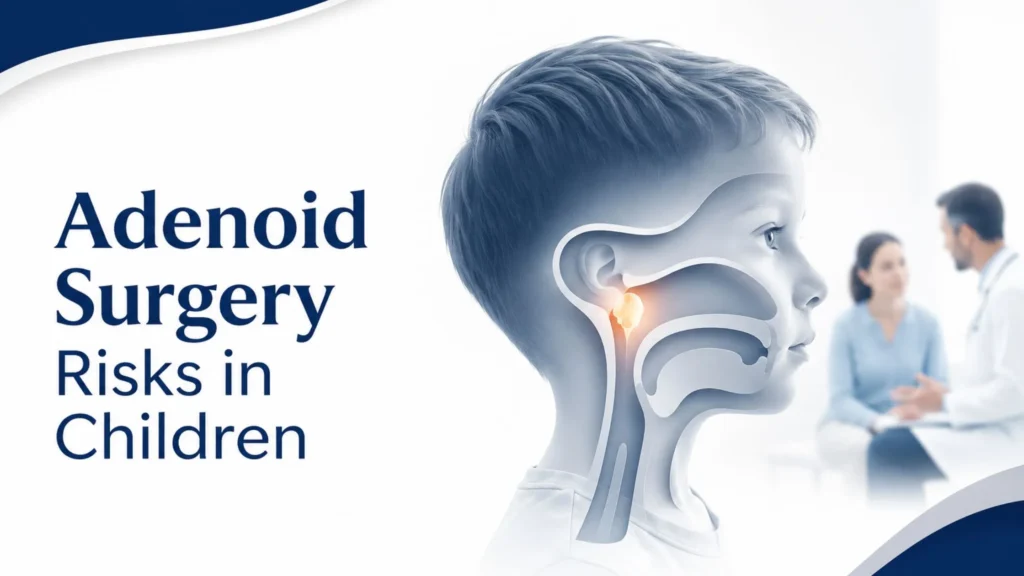
Parents naturally feel concerned when doctors recommend surgery for their child. Questions about complications, anesthesia safety, recovery problems, and long-term effects are common before pediatric ENT procedures. Understanding adenoid surgery risks in children helps parents make informed decisions and feel more confident during treatment planning.
Adenoidectomy is a commonly performed ENT surgery used to treat enlarged or infected adenoids that affect breathing, sleep quality, ear health, and overall comfort. Although the procedure is generally considered safe, parents should understand the possible risks, recovery expectations, and the importance of proper ENT evaluation before surgery.
Learning about adenoid surgery risks in children also helps families recognize warning signs, follow recovery instructions properly, and support smoother healing after treatment.
Table of Contents
- Understanding Adenoids
- Why Adenoid Surgery Is Recommended
- Is Adenoid Surgery Safe for Children?
- Common Adenoid Surgery Risks in Children
- Risks Related to General Anesthesia
- Bleeding After Adenoid Surgery
- Infection Risks After Surgery
- Breathing Problems During Recovery
- Temporary Throat Pain and Swallowing Difficulty
- Ear Pain After Surgery
- Nasal Voice or Speech Changes
- Dehydration During Recovery
- Rare Risks of Adenoid Surgery
- Can Adenoids Grow Back?
- How ENT Specialists Reduce Surgical Risks
- Importance of Following Recovery Instructions
- Warning Signs Parents Should Watch For
- Benefits of Timely Surgery
- Summary
1. Understanding Adenoids
Adenoids are small lymphatic tissues located behind the nose and above the throat. They help the immune system fight infections during childhood.
However, enlarged adenoids may block airflow and contribute to:
- Mouth breathing
- Snoring
- Sleep disturbance
- Recurrent ear infections
- Nasal blockage
- Hearing problems
Understanding these symptoms helps parents better evaluate adenoid surgery risks in children and the need for timely treatment.
2. Why Adenoid Surgery Is Recommended
Doctors may recommend adenoidectomy when enlarged adenoids continue causing symptoms despite medications or allergy treatment.
Common reasons include:
- Persistent breathing difficulty
- Sleep-related breathing problems
- Chronic snoring
- Repeated ear infections
- Hearing concerns
- Recurrent sinus infections
Before discussing adenoid surgery risks in children, doctors usually perform detailed ENT evaluations and diagnostic assessments.
3. Is Adenoid Surgery Safe for Children?
One of the biggest concerns parents have regarding adenoid surgery risks in children is overall safety.
Adenoidectomy is generally considered a safe and commonly performed pediatric ENT procedure. Modern surgical techniques, anesthesia monitoring, and post-operative care have improved patient safety significantly.
Most children recover smoothly without serious complications when surgery is performed by experienced ENT specialists.
4. Common Adenoid Surgery Risks in Children
Although complications are uncommon, parents should understand possible adenoid surgery risks in children before treatment.
Potential risks may include:
- Mild bleeding
- Temporary throat discomfort
- Swallowing difficulty
- Ear pain
- Infection
- Dehydration
- Temporary nasal speech changes
Most symptoms improve gradually during recovery with proper medical guidance.
5. Risks Related to General Anesthesia
Parents often worry about anesthesia safety during pediatric surgery.
Before surgery, anesthesia specialists evaluate the child’s medical condition carefully. Throughout the procedure, breathing, oxygen levels, heart rate, and blood pressure are continuously monitored.
Although anesthesia complications are rare, understanding anesthesia-related adenoid surgery risks in children helps parents prepare emotionally for treatment.
6. Bleeding After Adenoid Surgery
Mild bleeding may occasionally occur after surgery, especially during the early recovery period.
Parents are generally advised to monitor for:
- Blood from the nose or mouth
- Persistent swallowing
- Vomiting blood-stained fluid
Severe bleeding is uncommon, but medical attention may be necessary if symptoms persist.
7. Infection Risks After Surgery
Infection is one of the possible adenoid surgery risks in children, although it is generally uncommon.
Doctors may recommend medications and proper hygiene measures to support healing and reduce infection risk.
Symptoms requiring medical attention may include:
- Persistent fever
- Increased throat pain
- Difficulty eating
- Foul-smelling discharge
Following post-operative instructions carefully helps improve recovery.
8. Breathing Problems During Recovery
Some children may temporarily experience nasal congestion or mild breathing discomfort after surgery.
Swelling inside the throat or nasal area may contribute to temporary symptoms during healing.
Parents discussing adenoid surgery risks in children often worry about breathing changes, but most symptoms gradually improve within the recovery period.
9. Temporary Throat Pain and Swallowing Difficulty
Mild throat discomfort is common after adenoidectomy.
Children may temporarily experience:
- Pain while swallowing
- Reduced appetite
- Mild throat irritation
Soft foods, hydration, and medications usually help reduce discomfort during recovery.
10. Ear Pain After Surgery
Some children may complain of ear pain after surgery even when the ears are healthy.
This happens because throat-related nerve pathways can create referred pain sensations around the ear region.
Temporary ear discomfort is generally manageable with medications and recovery care.
11. Nasal Voice or Speech Changes
Temporary nasal speech changes may occur during recovery because airflow patterns inside the nose and throat change after surgery.
In most cases, speech gradually returns to normal during healing.
Parents often include speech concerns among common adenoid surgery risks in children discussed before surgery.
12. Dehydration During Recovery
Children recovering from surgery may avoid eating or drinking because of throat discomfort.
Poor hydration may increase recovery problems and delay healing.
Parents should encourage:
- Frequent fluid intake
- Soft foods
- Adequate rest
- Proper medication use
Maintaining hydration is important after pediatric ENT surgery.
13. Rare Risks of Adenoid Surgery
Serious complications are rare but may occasionally occur.
Rare adenoid surgery risks in children may include:
- Significant bleeding
- Severe infection
- Persistent breathing problems
- Anesthesia-related complications
These risks are uncommon, especially when surgery is performed in appropriate medical settings.
14. Can Adenoids Grow Back?
Parents frequently ask whether adenoids can return after surgery.
Small regrowth may occasionally happen, but significant recurrence after proper removal is uncommon.
Regular ENT follow-up helps monitor healing and long-term outcomes.
15. How ENT Specialists Reduce Surgical Risks
Experienced ENT specialists take several precautions to reduce adenoid surgery risks in children.
These may include:
- Detailed ENT evaluation
- Proper diagnostic testing
- Pediatric anesthesia monitoring
- Careful surgical techniques
- Post-operative recovery guidance
Modern pediatric ENT care focuses heavily on safety and recovery quality.
16. Importance of Following Recovery Instructions
Recovery instructions play an important role in preventing complications.
Parents are generally advised to:
- Encourage hydration
- Give medications properly
- Avoid strenuous activity
- Follow dietary instructions
- Attend follow-up visits
Proper care helps reduce recovery-related adenoid surgery risks in children.
17. Warning Signs Parents Should Watch For
Parents should contact a doctor if a child experiences:
- Persistent bleeding
- High fever
- Difficulty breathing
- Severe dehydration
- Persistent vomiting
- Severe pain
- Reduced oral intake
Early medical attention helps manage complications effectively.
18. Benefits of Timely Surgery
Although parents worry about adenoid surgery risks in children, untreated enlarged adenoids may also create complications.
Benefits of timely treatment may include:
- Better breathing
- Improved sleep quality
- Reduced infections
- Better hearing support
- Reduced snoring
- Improved daily comfort
Timely ENT care often improves long-term quality of life for children.
19. Summary
Understanding adenoid surgery risks in children helps parents make informed decisions before pediatric ENT treatment. Although adenoidectomy is generally considered a safe and commonly performed procedure, parents naturally have concerns about anesthesia, recovery, bleeding, infection, and post-operative healing.
Most children recover smoothly with proper ENT evaluation, experienced surgical care, and appropriate recovery guidance. Learning about possible risks, warning signs, and recovery expectations can help families feel more confident and prepared during treatment.
Dr Salison Salim Panicker provides advanced pediatric ENT evaluation and adenoid treatment with modern diagnostic methods and patient-focused care.
For more information about adenoids and adenoidectomy, visit the ENT Health – Adenoids and Adenoidectomy.
Frequently Asked Questions
Dr Salison Salim Panicker
MBBS, DLO, DNB, PGDCC
ENT Surgeon and