adenoid symptoms in children
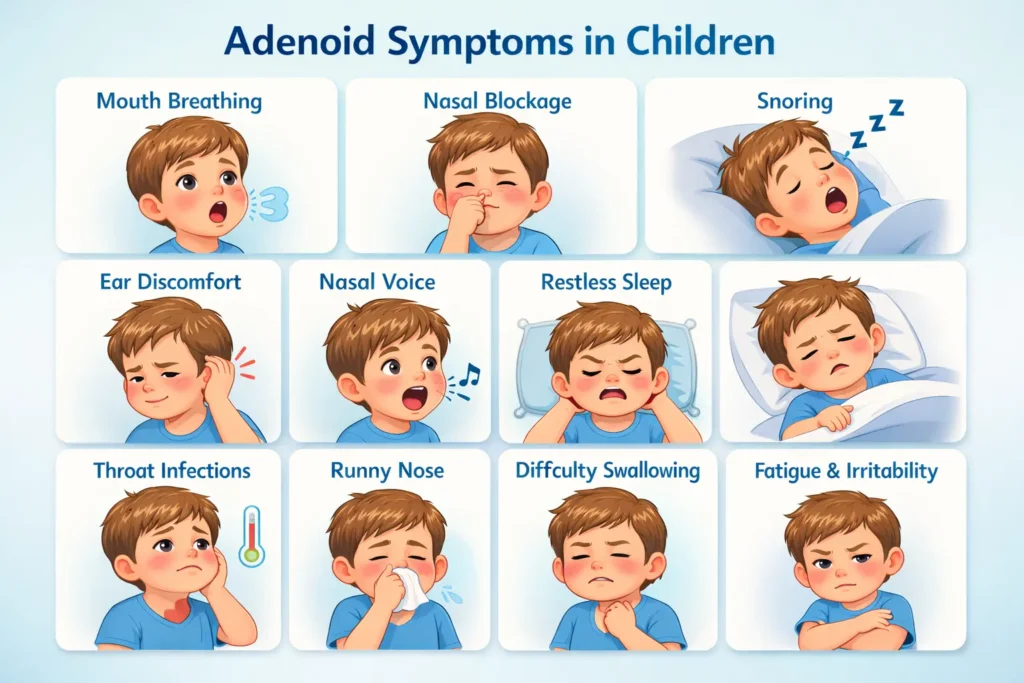
Adenoid symptoms in children are common and can affect breathing, sleep quality, ear health, speech, and overall daily comfort. Adenoids are small tissues located behind the nose that help the body fight infections during childhood. However, when these tissues become enlarged or infected, they can create several health problems that may interfere with normal growth and development.
Recognizing adenoid symptoms in children at an early stage is important because untreated adenoid enlargement can lead to repeated infections, poor sleep, difficulty concentrating, and breathing problems. Many parents mistake these symptoms for regular cold or allergy issues, delaying proper ENT evaluation and treatment.
Understanding adenoid symptoms in children helps parents identify warning signs early and seek timely medical care. Dr Salison Salim Panicker provides advanced pediatric ENT evaluation and treatment for children experiencing adenoid-related breathing and throat problems.
Table of Contents
- Understanding Adenoids
- Why Adenoids Become Enlarged
- Mouth Breathing in Children
- Persistent Nasal Blockage
- Snoring During Sleep
- Sleep Disturbances and Fatigue
- Recurrent Ear Infections
- Difficulty Hearing Clearly
- Nasal Voice Changes
- Frequent Throat Infections
- Difficulty Swallowing
- Bad Breath Problems
- Restless Sleep Patterns
- Daytime Irritability
- Poor Concentration in School
- Facial Changes Due to Mouth Breathing
- Importance of Early Diagnosis
- ENT Evaluation for Adenoid Problems
- Treatment Options for Enlarged Adenoids
- Summary
1. Understanding Adenoids
Adenoids are lymphatic tissues located behind the nasal cavity. They help protect children from infections by trapping bacteria and viruses entering through the nose.
In some children, adenoids become enlarged due to repeated infections or allergies, leading to noticeable adenoid symptoms in children.
2. Why Adenoids Become Enlarged
Common causes include:
- Repeated infections
- Allergic reactions
- Chronic sinus issues
- Environmental irritants
- Genetic factors
These factors may increase the severity of adenoid symptoms in children.
3. Mouth Breathing in Children
Mouth breathing is one of the most common adenoid symptoms in children. Enlarged adenoids block the nasal airway, making it difficult for children to breathe comfortably through the nose.
Persistent mouth breathing may affect sleep quality and facial development over time.
4. Persistent Nasal Blockage
Children with enlarged adenoids often experience continuous nasal congestion even without a cold. This blockage may worsen at night.
Persistent nasal obstruction is a major sign of adenoid symptoms in children.
5. Snoring During Sleep
Snoring occurs when airflow becomes partially blocked during sleep. Enlarged adenoids commonly contribute to loud snoring in children.
Severe snoring may indicate significant airway obstruction requiring ENT evaluation.
6. Sleep Disturbances and Fatigue
Poor sleep quality is one of the serious adenoid symptoms in children. Children may wake frequently at night or appear tired during the day.
Sleep problems may affect:
- Mood
- Concentration
- School performance
- Energy levels
7. Recurrent Ear Infections
Enlarged adenoids may block the Eustachian tube, increasing the risk of ear infections and fluid buildup behind the eardrum.
Repeated infections are common adenoid symptoms in children and may affect hearing temporarily.
8. Difficulty Hearing Clearly
Fluid accumulation caused by enlarged adenoids may reduce hearing clarity. Some children may ask others to repeat words frequently.
Early hearing evaluation is important when these symptoms appear.
9. Nasal Voice Changes
Children with enlarged adenoids may develop a nasal-sounding voice because airflow through the nose becomes restricted.
Speech changes are noticeable adenoid symptoms in children that may require ENT assessment.
10. Frequent Throat Infections
Recurring throat irritation or infections may occur due to chronic nasal blockage and mouth breathing.
11. Difficulty Swallowing
Some children experience discomfort while swallowing because enlarged adenoids affect the upper throat area.
12. Bad Breath Problems
Mouth breathing and chronic infections may contribute to persistent bad breath in children with enlarged adenoids.
13. Restless Sleep Patterns
Children may toss and turn frequently during sleep due to breathing difficulty.
Poor sleep quality is one of the most overlooked adenoid symptoms in children.
14. Daytime Irritability
Lack of proper sleep may lead to irritability, mood swings, and behavioral changes during daytime activities.
15. Poor Concentration in School
Children with sleep disruption may struggle with focus and academic performance.
16. Facial Changes Due to Mouth Breathing
Long-term mouth breathing can affect facial structure and dental alignment in growing children.
Early treatment helps reduce these risks.
17. Importance of Early Diagnosis
Early diagnosis of adenoid symptoms in children helps prevent complications such as:
- Chronic infections
- Sleep apnea
- Hearing issues
- Speech problems
Timely ENT consultation improves long-term outcomes.
18. ENT Evaluation for Adenoid Problems
ENT specialists evaluate symptoms using:
- Nasal examination
- Endoscopy
- Ear evaluation
- Sleep history assessment
Dr Salison Salim Panicker provides comprehensive pediatric ENT evaluation for adenoid-related conditions.
19. Treatment Options for Enlarged Adenoids
Treatment depends on symptom severity and may include:
- Nasal sprays
- Allergy management
- Antibiotics
- Steam inhalation
- Adenoidectomy surgery
Advanced ENT care helps reduce adenoid symptoms in children effectively.
20. Summary
Adenoid symptoms in children can affect breathing, sleep, hearing, speech, and overall quality of life. Common signs include mouth breathing, snoring, nasal blockage, recurrent ear infections, and restless sleep. Early recognition of these symptoms allows timely diagnosis and effective treatment before complications develop.
Proper ENT evaluation is essential to determine the severity of adenoid enlargement and select the best treatment approach. With expert care from Dr Salison Salim Panicker, children can receive accurate diagnosis and advanced treatment for improved breathing and healthier development.
To learn more about enlarged adenoids and pediatric ENT conditions, visit the ENT Health guide on adenoids and adenoidectomy.
Frequently Asked Questions
Dr Salison Salim Panicker
MBBS, DLO, DNB, PGDCC
ENT Surgeon and